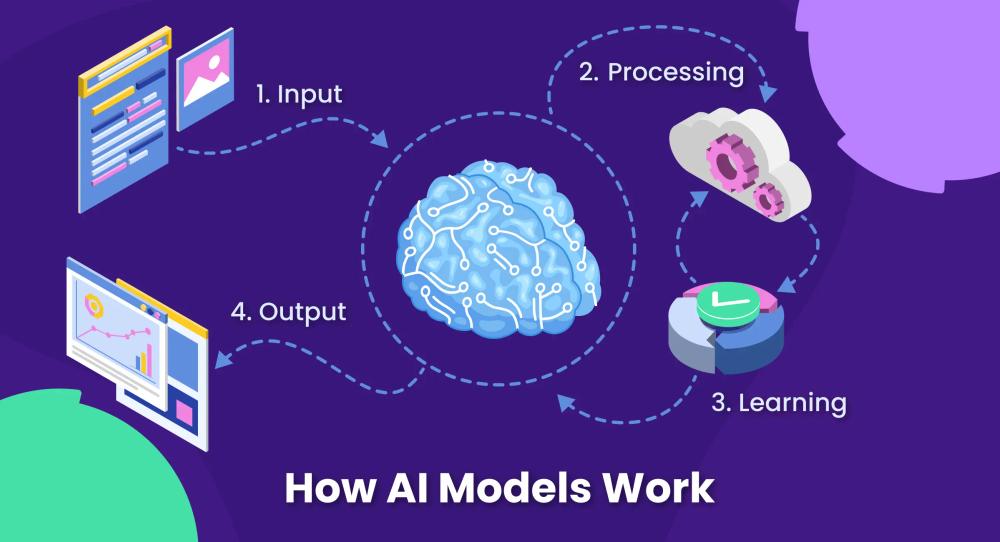
Part One: The Basic Concept of AI Large Models
First, let's clarify what "AI large models" means. AI large models typically refer to "Large Language Models" (LLMs). These are computer programs built on artificial intelligence technology that can process and generate human language, such as text, conversations, or even code.
Imagine how you learned to speak as a child: by listening to parents, teachers, and friends, you gradually picked up vocabulary, grammar, and ways of expressing yourself. The "learning" process for AI large models is similar, but it's trained on massive amounts of data. This data includes books, websites, news articles, and other text from the internet. The model analyzes this data to learn language patterns, rules, and knowledge.
Why are they called "large" models? Because of their enormous scale! A large model might contain billions or even trillions of "parameters." Parameters are like the model's "neurons," determining how it understands and responds to inputs. For example, models like OpenAI's GPT-4 or xAI's Grok can have trillions of parameters, making them capable of handling complex problems and smarter than smaller models.
Part Two: How Do AI Large Models Work?
The working principle of large models is based on an architecture called "Transformer." This is a type of neural network structure invented around 2017, and it's now the core of most large models.
Simply put, Transformer is like a super-smart translator or predictor. When you input a sentence, like "What's the weather like today?", the model will:
- Break Down the Input: Split the sentence into words or smaller units (called tokens), then represent them with numbers.
- Attention Mechanism: The model "pays attention" to the relationships between each word in the sentence. For instance, in "Apple falls to the ground," it knows "Apple" might refer to the fruit, not the company.
- Predict the Output: Based on patterns learned during training, the model predicts the next word or the entire response. It doesn't truly "understand" the world but generates reasonable answers through statistical probabilities.